
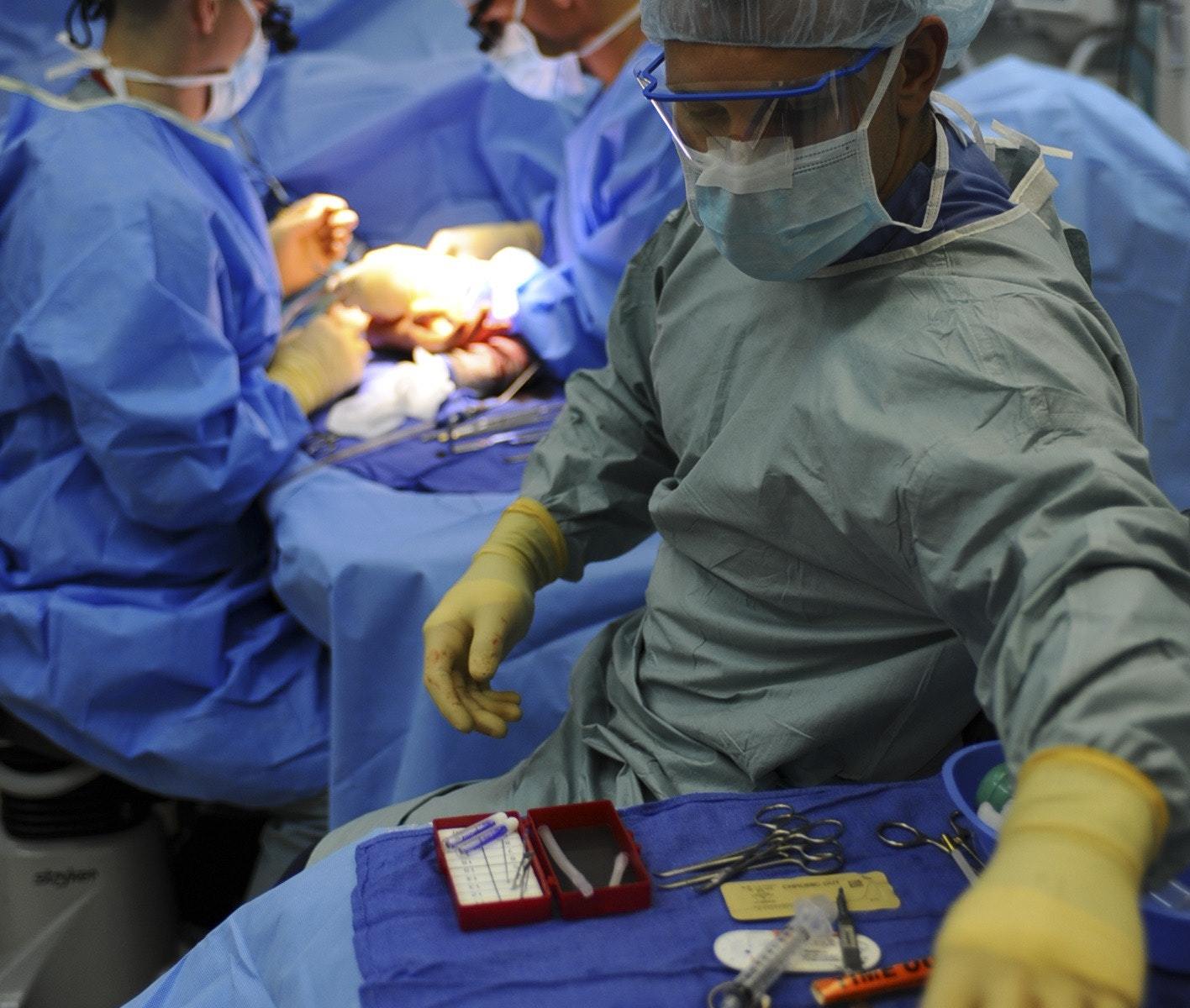
The experience of a young French student undergoing emergency surgery in Cork and faced with the near impossibility of receiving post-operative care in Ireland.
It is said that Health is our most precious asset. It is probably in this sector that our expectations, in terms of quality of care and the seriousness of the care provided, are the most demanding.
We have met Alice* who told us about her comparative experience of an Irish hospital, she is a French citizen who are studying in Ireland where she used to live in Cork. We also have met a French General Practitioner, Dr Franck Ruimi, to explain us what he thinks about the Irish Health Care.
It is a well-known fact that French people always criticise their country in any topic: decisions taken by the government about work, school, health… and the list goes on. We have a tendency to think that everything is better abroad. In fact, we realise that France is not that bad when we go outside of the country. We even don’t need to go to the extreme South of the American Continent, one hour from Paris is absolutely enough, no one would expect such an unsatisfactory health care system.
The lovely story started in Cork, the second biggest city of Ireland but not so crowded and so immense, the City counts about 210,000 inhabitants and 8 hospitals. Until this point, everything seems normal and we could think that we don’t need more hospitals for a City of this capacity. The situation is, quite unexpectedly, awful.
Alice had felt something swelling in his body for four days, she went to the emergency of the Mercy University Hospital of Cork, highly stressed. In the waiting room, no more than 10 people and “between 12 and 14 hours of waiting time” was written on the screen. In first reaction, she didn’t believe it, it seemed that the screen didn’t work. After 6 hours, furious, she asked them how long she had to wait because she hadn’t eaten anything for hours and the answer was : “I have no idea. Hospitals are like that in Ireland. It’s on the news every day.” Alice arrived at 1 pm on Tuesday, and left the waiting room at 4 in the morning on Wednesday. So the screen did not actually work, she waited 15 hours. In France, the average waiting time is about 2 hours in the emergency. At 8 in the morning, Alice was told that she would be operated “soon”. In fact, the operation started at 4 in the afternoon. Ireland obviously has a much calmer rhythm of time and sense of urgency than France.
At the hospital, our young French student felt as if she was in World War II: about thirty beds in the same open-space without any privacy, and approximately one hundred of beds in the corridor. She was in a double bedroom for some hours before the nurse kicked her out from this bedroom to put her on a chair. What can we say about the corridors? Old, narrow and cluttered with beds that make it difficult for the medical staff and impossible for the patients to get through.
“About thirty beds in the same open-space without any privacy, and approximately one hundred beds in the corridor”
When she went home, she really thought it was the end of the nightmare, it was actually the beginning. In the hospital, the medical personnel insisted about the post-operative care, and that it’s absolutely vital that she has to change her dressing every day to make her wound better to avoid infection. Despite her questions, at no time the nursing staff did tell her where and how she could change her dressing and continue her postoperative care. According to the French GP: “Post-operative care is as important as the operation itself. In this case, a wound observation by a healthcare professional, drainage and dressing change had to be carried out daily for several weeks to ensure that there was no risk of infection or even septicaemia.” In France, the system is completely different from Ireland. “In France, if you have a surgical operation, the hospital that operated on you, then treats you for a few days and then gives you a prescription that allows you to be treated by a nurse who will come to your home as long as necessary and without you having to pay anything in advance. The French system manages almost everything from the beginning to the end, and in the end the patient only has to choose the nurse who will come to treat him at home.” From what Dr Ruimi says, “The public system does much less, sometimes even the bare minimum. It is up to the patient to take care of himself and in most cases it is up to him to advance the cost of medical expenses.” In Ireland, people have to call the entire city to beg someone to help them. Without forgetting that after a surgery, patients are not in condition to run the Marathon of New York! Alice couldn’t find anyone to change her dressing so she went back to the hospital explaining her problem. Some nurses changed her dressing during 3 days blaming Alice that she should go to a GP. Going to a general practitioner every day to change a dressing? It sounds like a joke.

Credits : Jonathan Borba, 2019
Finally, after several difficult discussions and a request to the hospital management, Alice managed to get two weeks of free post-operative care in a dispensary far away from her home where she had to travel daily by taxi, about €30 per day. After that, the staff at the hospital where she had been operated referred her to a dressing clinic closer to her home, but when she went to that facility they announced her: “you can’t come back here.” No more explanation. What is the point to create a dressing clinic if people who need it can’t come more than once? She must have had to manage on her own so she found a GP thanks to her school and had to pay every single day to change her dressing.
The operation was a success from a medical point of view, but the post-operative care and patient management was a disaster. “Healthcare staff are demotivated and patients are overwhelmed.” Based on what Dr Ruimi said. Alice sums up her feeling by saying that she understands that health care systems differ from one country to another, that everywhere doctors and nurses are serious and dedicated, even in unfavourable environments; but that we must never forget that the sick person is always in a vulnerable situation and that caring, more than a technical medical act, is above all taking care.
In conclusion, if you were about to have a surgery in Ireland you would be operated on by teams of skilled and dedicated doctors and nurses, if you can find a bed in a hospital and then a place where you can get the post-operative care that you absolutely need!
 People First News