

How would you react if you learnt that one of your family member had extreme political ideologies?
Psychiatrists and psychologists have observed that the subjects of family secrets are infinitely varied. Births, deaths, transgressions of all kinds, misfortunes, deceptions, madness, disability, etc., are all subjects of family secrets. In fact, it is about everything that could harm oneself or the image of the family, everything that should never have existed and that could be harmful. To everything we are ashamed of, including sometimes even the most insignificant things”.
In fact we are neither truly free nor truly detached from our histories, and these can become very alienating.
Confronted with the secrets of others, of which we are more or less aware, or with our own secrets, it should be possible to ask the question: “But why am I like this? What is it that makes me keep quiet, keep the secret?
All the specialists will tell you: It is shame. The shame that binds us together and forces us to secrecy. We have met some people who accepted to talk about their experience: Emily, David and Leo, each in their own way, are not exempt from it. (1)
David’s family which are christians are used to invite each other for Sunday lunch and his mother usually takes the opportunity to invite friends and family at the same time but spoiler alert: it is absolutely a very bad idea. The grandfather of David is really involved in religion and he is kind of obsessed about this topic. In 99% of family meetings, he asks the famous question to the people invited: “do you believe in God?”. At this moment, two choices are possible. We could think that if the person responds “yes” the conversation is over. In fact, if you are not, there is then an endless argument, but even if you say “yes” he will ask you if you are “a good christian”, there is unfortunately no end. In other words, if you don’t often go to the church, he will let you know that you will go to hell.
believe what he had just said.” Another example of an extreme position, the father of Emily because yes, parents can be outdated as well. The problem that she has encountered is that her father has a set idea which is impossible to fix even if she used to challenge preconceived ideas in vain. “When we start a discussion about religion or skin colours, it is without exception that we start an argument and I know that it is pointless to talk about that with him.” One day, she
assisted to a scene which shocked her: “Some years ago, a lot of terrorist attack took place in France. On TV, the media used to announce the origin or the skin colour of the person or people involved, my father was constantly saying “always the same people” when it was about North African people or black people.”
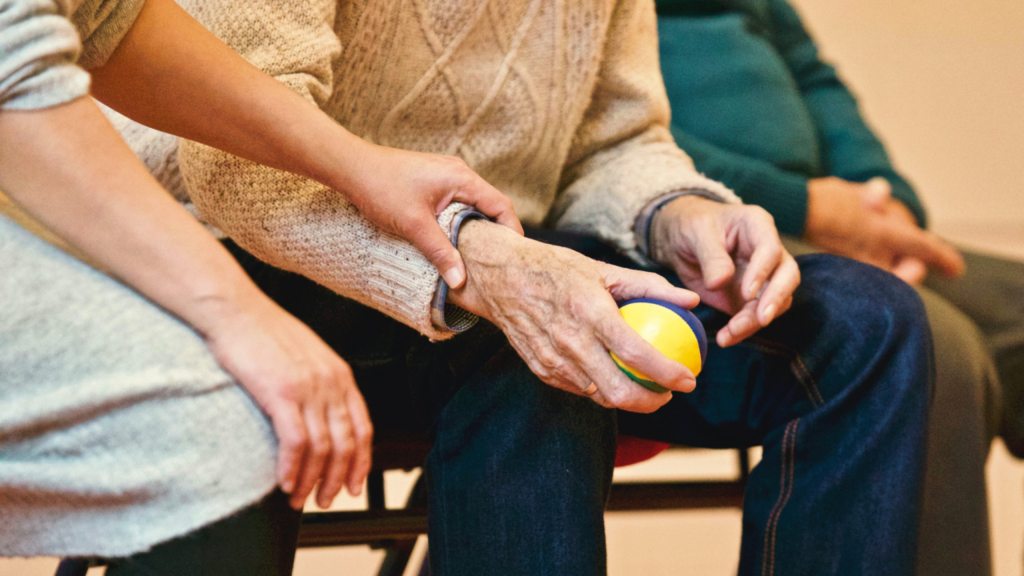
Credits : Matthias Zomer, photographer, November 18th 2016
This kind of situation can really turn bad then make familial relationships stop. The worst situation which happened to David was when his grandfather told his sister-in-law that she is ruining her life because she does not believe in God. “She started crying and even my grandfather apologised because he saw by himself that he went too far. Even taking his excuses into account, my family knows that this event was the triggering of the end of their relationship.”
What is the best reaction after this kind of comments? Some people would think about ignoring the remarks, from another perspective, other people would believe that it is important to try to fix it. Starting arguing with the person is far from being a good solution. The most important problem is, in the reality, we are not always prepared. “We were shocked. We just kept looking at each other with a disproval and surprise eyes; we were all speechless.” according to Leo.
Our three interviewees, agree that a “family secret” that is difficult to take on has permanently affected their relationship with either grandfather or father. “He is definitely narrow-minded and that’s why we are not close enough. He is always judgmental, so I don’t feel like talking to him about anything of my life.” admits Emily. You can see it: the unspoken and the hidden honesty permanently alters family
relationships. The trouble of this situation is that people have frequently an influence on their family making them think in the same way. That is the case for Emily, her mother used to have a point of view completely different from her husband until lately. The problem in these situations is that they almost always have a negative influence on the lives of all the family members involved.
“David acknowledges his sadness in front of all the beautiful family relationships ruined, especially with his grandfather because of the taboos and the bad energy that resulted.”
Emily, told us about her life with a racist father. She talks about how she tried in vain to change her father’s mind. We can see her personal weariness, but also the exhaustion of all the siblings. Nothing seems to be able to change and the situation even gets worse as their own mother ends up agreeing with her husband’s racist views. She reminds us of her shame and that of her brother and sister, the weight of the secret shared with them. She also tells us her sorrow about her mother’s evolution, but also the difficulties to concentrate on their studies in such a difficult context and also the serious alteration to social relations that this causes for her brother, her sisters and herself to no longer dare to invite any of their friends home.
Finally, both of them agree to admit that on one side they would love to make them change of position, and on another side, old people are stubborn and narrow-minded.
“My father can argue with the same arguments for hours, he won’t never change his mind. With time, we gave up but I try to avoid this kind of subjects at any cost.” from what Emilie says. These two stories are apparently different: David is struggling to understand what is going on in his family and to lift the veil of the grandfather’s secret. Emily, faced with a situation that is too painful, is in the process with her brother and sister of installing precisely the veil of a family secret: that no one should know that our father is racist.
In both cases, however, it is exactly the same: hide, keep silent, preserve the secret, avoid shame. The consequences are also similar: pain, sorrow, suffering, disturbance of well- being and alteration of the bonds of ties within the family and outside too.
It is important to have good relationships with their family and especially parents and grandparents. Grandparents have acquired knowledge throughout their whole life and they have also a different experience of a life in another period of time. They can teach what they know but they also can learn a lot of things from their grandchildren, the fact that two generations are between us is something that people should take more in consideration.
The evolution of morals and social traditions and the spread of psychological knowledge have contributed to a certain liberation of speech and the revelation of traditionally hidden things. Thus many situations long considered shameful or dangerous are now more considered as such.
However, “every situation, even socially accepted, can be experienced intimately as unacceptable and painful. It then risks becoming a secret” as Dr. S. TISSERON explains (2).
Thus, silence and secrecy may appear to be the only possible solution because it is seen as the only way to maintain a certain family peace, when truth, it is thought, would engender disorder and chaos”.
Thus, even with the evolution of mentalities and the liberation of speech, the secrets of families do not seem to be about to disappear.

(1) The names has been changed.
(2) S. TISSERON Psychiatrist, quoted in “Psychologie Magazine” Paris. February 2020.
 People First News